

Choosing smart home devices can feel confusing when every option promises major upgrades. For homeowners and young professionals searching for affordable solutions, understanding the interconnected ecosystem at the heart of smart homes is key. With innovations ranging from energy management to security and comfort, this guide reveals how reliable technology can simplify daily life and help you build a safe, connected home that fits your budget.
Table of Contents
- Smart Home Basics and Core Concepts
- Types of Smart Home Devices Explained
- How Smart Home Systems Operate
- Benefits of Smart Home Integration
- Risks, Costs, and Common Challenges
Key Takeaways
| Point | Details |
|---|---|
| Integration | Smart home technology creates an interconnected system of devices that enhances efficiency, security, and comfort in residential living. |
| Key Components | Essential components include connectivity devices, sensors, control interfaces, and automated systems, all designed to work together seamlessly. |
| Operation | Smart home systems operate through complex networks that utilize various communication protocols for real-time data exchange and automation. |
| Risks and Challenges | Potential adopters should consider risks such as privacy, cybersecurity threats, and financial investments, emphasizing the need for robust protective strategies. |
Smart Home Basics and Core Concepts
Smart home technology represents a transformative approach to residential living, integrating digital connectivity and automation into everyday household environments. These intelligent systems leverage networked devices and sensors to enhance convenience, efficiency, and personal comfort through sophisticated technological solutions.
At its core, smart home technology creates an interconnected ecosystem where various electronic devices communicate and coordinate seamlessly. Research exploring technological adoption perspectives reveals multiple dimensions beyond simple gadgetry, including critical aspects like energy management and potential healthcare applications.
Key components of smart home infrastructure typically include:
- Connectivity Devices: Routers, smart hubs, and wireless networks enabling device communication
- Sensor Technologies: Motion detectors, temperature monitors, and environmental tracking systems
- Control Interfaces: Smartphone apps, voice assistants, and centralized control panels
- Automated Systems: Smart thermostats, lighting controls, security mechanisms
The fundamental goal of smart home technology is creating responsive, adaptive living spaces that anticipate and support residents’ needs. These systems offer significant advantages by streamlining daily tasks, reducing energy consumption, and providing enhanced security monitoring.
Smart homes transform living spaces from static environments into dynamic, intelligent ecosystems that actively support residents’ lifestyles and preferences.
Understanding smart home technology requires recognizing its multifaceted nature. It’s not merely about installing fancy gadgets, but developing an integrated technological framework that enhances overall quality of life.
Pro tip: Start your smart home journey by identifying specific pain points in your daily routine where automation could provide meaningful convenience.
Types of Smart Home Devices Explained
Smart home devices have revolutionized residential technology, offering diverse solutions that transform how people interact with their living spaces. Consumer preferences survey global technology trends revealing a complex landscape of interconnected technological innovations.
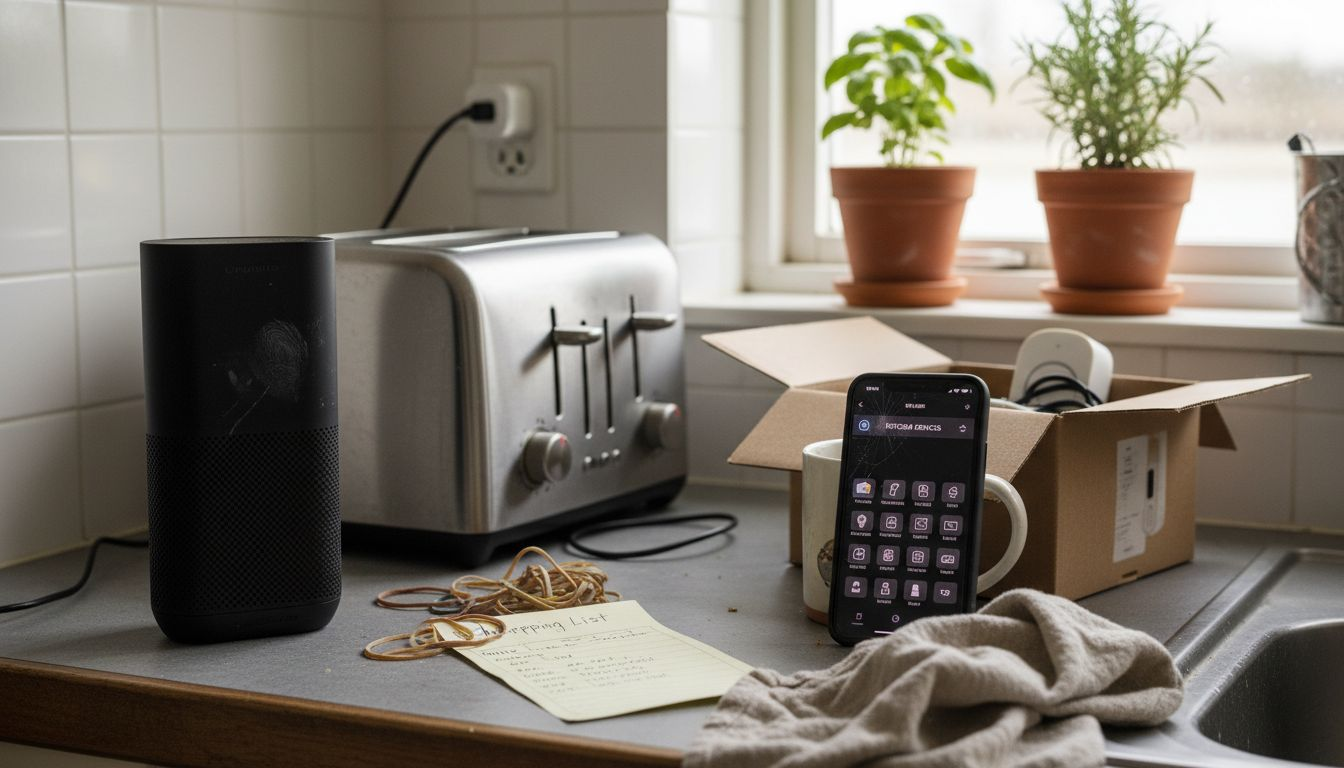
The smart home ecosystem encompasses multiple device categories designed to enhance convenience, security, and energy efficiency. Home automation taxonomy helps clarify the distinctions between various technological capabilities and practical applications.
Key smart home device categories include:
Here is a concise comparison of smart home device categories and their primary home impact:
| Device Category | Main Benefit | Typical Example |
|---|---|---|
| Security Devices | Improved home safety | Smart cameras |
| Climate Control | Energy savings | Smart thermostats |
| Lighting Solutions | Ambiance control | Color-changing bulbs |
| Entertainment | Hands-free control | Smart speakers |
| Energy Management | Lower utility costs | Monitoring plugs |
- Security Devices: Smart locks, surveillance cameras, alarm systems
- Climate Control: Smart thermostats, window sensors, air quality monitors
- Lighting Solutions: Programmable LED systems, motion-activated lights, color-changing bulbs
- Entertainment Systems: Voice-controlled speakers, smart TVs, integrated sound systems
- Energy Management: Smart power strips, energy monitoring plugs, solar integration devices
Modern smart home technologies go beyond simple automation, creating intelligent environments that adapt to residents’ preferences and behaviors. These systems leverage advanced sensors and artificial intelligence to provide seamless, intuitive interactions.
Smart home devices are not just technological accessories, but sophisticated tools that transform living spaces into responsive, efficient ecosystems.
Understanding device compatibility and integration remains crucial for building a cohesive smart home network. Consumers should prioritize interoperability and scalability when selecting individual components.
Pro tip: Research device ecosystem compatibility before purchasing to ensure seamless integration and future expandability of your smart home system.
How Smart Home Systems Operate
Smart home systems function through a complex network of interconnected devices and communication protocols that enable seamless automation and intelligent control. IoT-based smart home architectural models reveal sophisticated mechanisms for integrating sensors, controllers, and actuators across residential environments.
The fundamental operational framework of smart home systems relies on several critical technological components that work in concert to create responsive and adaptive living spaces. These systems leverage advanced communication technologies like Wi-Fi, Bluetooth, and Zigbee to facilitate real-time data exchange and device coordination.
Key operational components include:
- Communication Protocols: Wireless networking standards enabling device interconnectivity
- Central Control Hub: Processing unit coordinating device interactions and commands
- Sensor Network: Environmental monitoring devices collecting real-time data
- Actuator Systems: Mechanisms executing automated actions based on sensor inputs
- Cloud Infrastructure: Remote processing and storage platforms for system intelligence
The integration of artificial intelligence and machine learning allows smart home systems to develop predictive capabilities, learning from user behaviors and automatically adjusting system responses. These intelligent platforms can anticipate needs, optimize energy consumption, and enhance overall home functionality.
Smart home systems transform passive living spaces into dynamic, responsive environments that actively adapt to residents’ preferences and requirements.
Understanding the technical infrastructure helps users appreciate the complexity behind seemingly simple automated interactions. Each device functions as part of a larger, interconnected ecosystem designed to simplify and enhance daily living experiences.
Pro tip: Invest in a central smart home hub that supports multiple communication protocols to maximize device compatibility and system flexibility.
Benefits of Smart Home Integration
Smart home technologies offer transformative advantages that extend far beyond simple convenience, revolutionizing how individuals interact with their living environments. User perceptions reveal multiple technology benefits demonstrating significant improvements in daily life quality and personal efficiency.
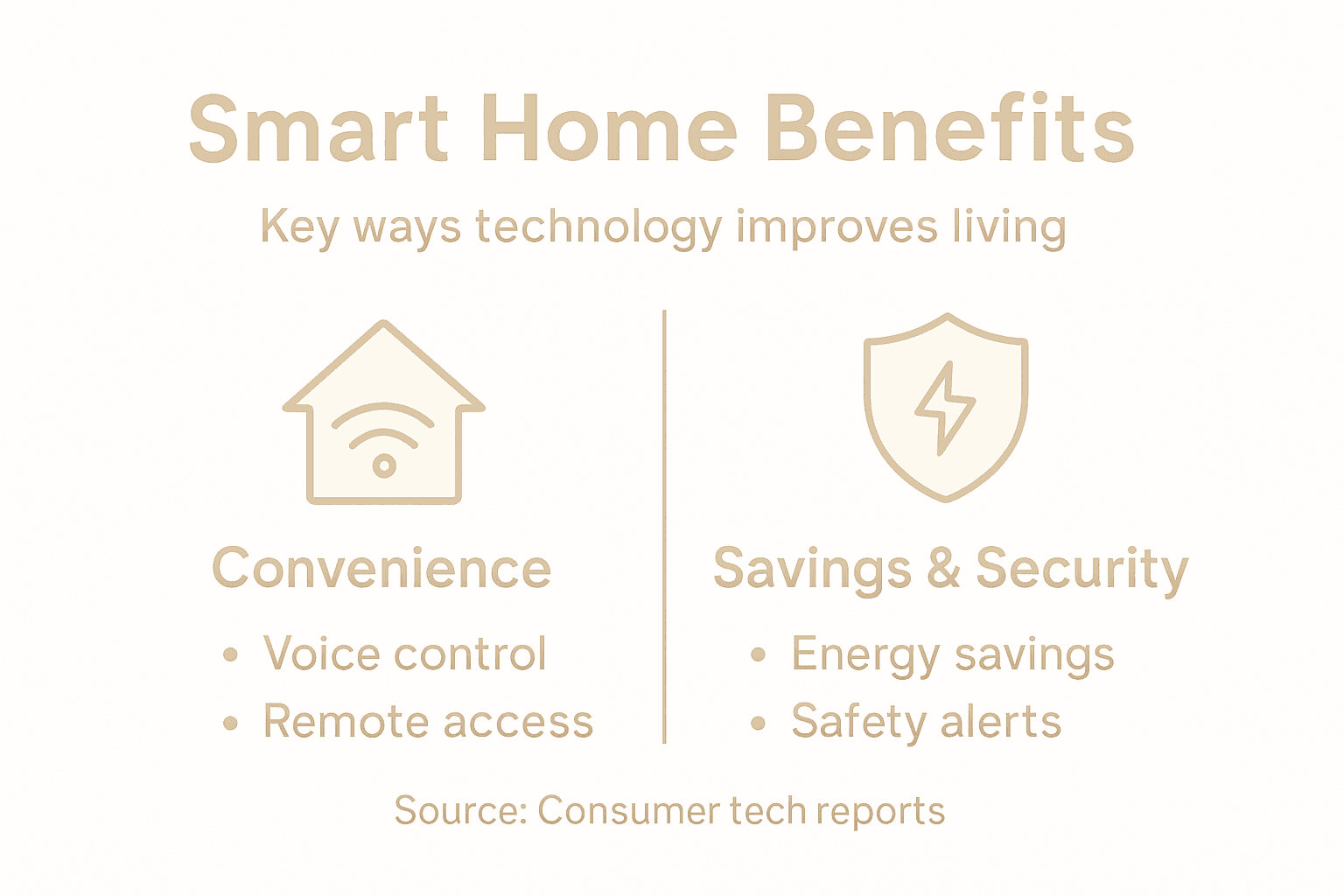
Smart home networks facilitate comprehensive lifestyle enhancements through intelligent technological integration that addresses multiple aspects of residential living. These systems provide comprehensive solutions that adapt to individual preferences while optimizing resource management and personal comfort.
Key benefits of smart home integration include:
- Enhanced Security: Real-time monitoring, automated alerts, and remote access controls
- Energy Efficiency: Intelligent power management, automated climate control, reduced waste
- Convenience: Automated task execution, voice-controlled interfaces, personalized settings
- Health Monitoring: Activity tracking, environmental quality assessment, wellness insights
- Cost Savings: Optimized resource consumption, predictive maintenance, reduced utility expenses
Modern smart home technologies leverage artificial intelligence to create adaptive environments that learn from user behaviors. These intelligent systems can anticipate needs, adjust settings automatically, and provide personalized experiences that improve overall quality of life.
Smart home integration transforms residential spaces from passive structures into dynamic, responsive ecosystems that actively support residents’ well-being and preferences.
The comprehensive nature of smart home technologies extends beyond individual device functionality, creating interconnected networks that streamline daily activities and provide unprecedented levels of control and insights into home environments.
Pro tip: Start with foundational smart home devices that offer immediate value and scalability, focusing on systems with robust integration capabilities.
Risks, Costs, and Common Challenges
Smart home technologies, while revolutionary, present complex challenges that potential adopters must carefully consider. Systematic literature reveals digital security risks associated with interconnected home environments, highlighting critical vulnerabilities that demand proactive management.
Smart home ecosystem risk interdependencies demonstrate the multifaceted nature of technological integration, requiring comprehensive strategies to mitigate potential threats and ensure user protection.
Key risks and challenges include:
The following table summarizes the biggest smart home risks alongside essential user strategies:
| Risk Area | Primary Concern | User Strategy |
|---|---|---|
| Privacy | Data exposure | Limit shared info |
| Cybersecurity | System hacking | Enable strong passwords |
| Cost | High initial expense | Set phased budget plan |
| Reliability | Device failures | Monitor system updates |
| Complexity | Integration issues | Research compatibility |
- Privacy Vulnerabilities: Potential unauthorized data collection and personal information exposure
- Cybersecurity Threats: Hacking risks, malware attacks, and potential system breaches
- Financial Investments: Initial setup costs, ongoing maintenance expenses, and device upgrades
- Technical Complexity: Learning curves, compatibility issues, and system integration challenges
- Reliability Concerns: Potential system failures, communication disruptions, and performance inconsistencies
Understanding these challenges requires a nuanced approach that balances technological benefits against potential risks. Consumers must develop critical awareness of the complex technological landscape and implement robust protective strategies.
Smart home adoption demands a proactive approach to risk management, emphasizing security, privacy, and continuous technological education.
The financial dimension of smart home integration involves careful consideration of both upfront and long-term expenses. Potential adopters should conduct thorough research, assess individual needs, and develop a strategic implementation plan that maximizes value while minimizing potential vulnerabilities.
Pro tip: Prioritize devices with strong encryption, regularly update firmware, and implement multi-factor authentication to minimize potential security risks.
Unlock the Full Potential of Your Smart Home Today
Smart home technology offers remarkable comfort, security, and energy savings, but setting up a truly integrated system can feel overwhelming. Whether you are concerned about device compatibility or worried about privacy and cybersecurity as discussed in the article, the key is choosing high-quality, reliable products that work seamlessly together. At ShopTech.al, we understand these challenges and provide expertly selected electronic devices designed to enhance your home with genuine performance and trusted warranties.
Shop with confidence at ShopTech.al where you get:
- Authentic smart home devices including security cameras and smart appliances
- Clear product descriptions and customer reviews to guide your choices
- Competitive pricing plus fast delivery across the country

Take control of your home’s technology and experience the real benefits of smart living. Start building your smart home ecosystem now by exploring our latest arrivals and special promotions at ShopTech.al. Discover how easy it is to upgrade your lifestyle with reliable tech solutions made just for you. Visit ShopTech.al and transform your house into the responsive, secure, and energy-efficient home you deserve.
Frequently Asked Questions
What is smart home technology?
Smart home technology refers to the integration of digital connectivity and automation in residential settings, allowing various electronic devices and systems to communicate and work together to enhance convenience, efficiency, and personal comfort.
What are the key components of a smart home system?
Key components of a smart home system include connectivity devices (like routers and smart hubs), sensor technologies (such as motion detectors and temperature monitors), control interfaces (like smartphone apps and voice assistants), and automated systems (such as smart thermostats and lighting controls).
How does smart home technology improve energy efficiency?
Smart home technology improves energy efficiency through intelligent power management, automated climate control, and monitoring systems that help reduce waste, optimize resource consumption, and lower utility costs.
What are the potential security risks associated with smart home devices?
Potential security risks include privacy vulnerabilities from unauthorized data collection and cybersecurity threats such as hacking and malware attacks. Users should implement strong security measures, including robust passwords and regular updates, to mitigate these risks.